⚡ EV Charger Installation in Newfoundland
Charge Faster at Home. Installed Right the First Time.
SBG Electrical provides professional Level 2 EV charger installation in Newfoundland, giving you safe, reliable 240V home charging for your electric vehicle.
No extension cords.
No overloaded circuits.
No guessing.
Just clean, code-compliant installation by a licensed electrician who shows up on time.
🚗 What You Get
We install Tesla Wall Connectors and all major Level 2 EV chargers.
Why Install a Level 2 EV Charger?
If you’re searching for:
You’re in the right place.
🔌 Get Powered Up
Upgrade your home for electric vehicle charging today.
Contact SBG Electrical for a fast, professional EV charger installation quote.
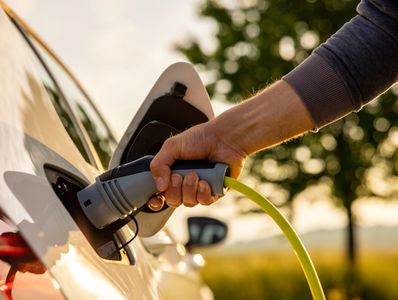
"Level 1 charging uses a common 120-volt household outlet. Every electric vehicle or plug-in hybrid can be charged on Level 1 by plugging the charging equipment into a regular wall outlet. Level 1 is the slowest way to charge an EV. It adds between 3 and 5 miles of range per hour.
Level 1 charging works well for plug-in hybrid electric vehicles (PHEVs) because they have smaller batteries, currently less than 25 kWh. Since EVs have much larger batteries, Level 1 charging is too slow for most daily charging, unless the vehicle isn’t needed to drive very far on a daily basis. Most BEV owners find that Level 2 charging better suits their daily charging needs"
Connectors Used: J1772, Tesla
Charging Speed: 5 to 8.5 km Per Hour
Locations: Home, Workplace & Public
"Level 2 charging is the most commonly used level for daily EV charging. Level 2 charging equipment can be installed at home, at the workplace, as well as in public locations like shopping plazas, train stations and other destinations. Level 2 charging can replenish between 20 and 130 km of range per hour, depending on the power output of the Level 2 charger, and the vehicle’s maximum charge rate.
Most BEV owners choose to install Level 2 charging equipment at their residence, because it charges the vehicle up to 10 times faster than Level 1 charging. Charging from a Level 2 source usually means the vehicle will be completely charged overnight, even if you plugged with a nearly empty battery.
Level 2 chargers can deliver up to 80 amps of power. But that requires a 100-amp 208-240V dedicated circuit and a heavy, costly supply line from the breaker box. Most owners will be well served choosing a 40-amp charger that can deliver 9.6 kW to the EV. A 48-amp charger can charge slightly faster at 11.5 kW, but requires a heavier gauge wire and the charger must be hardwired to comply with the NEC code. Therefore, 48-amp chargers can cost significantly more than a 40-amp unit and offer only marginally faster charging"
Connectors Used: J1772, Tesla
Charging Speed: 20 to 130 kms Per Hour
Locations: Home, Workplace & Public
"Level 3 charging is the fastest type of charging available and can recharge an EV at a rate of 5 to 32 km of range per minute. Unlike Level 1 and Level 2 charging that uses alternating current (AC), Level 3 charging uses direct current (DC). The voltage is also much higher than Level 1 & 2 charging, which is why you don’t see level 3 chargers installed at home. Very few residential locations have the high-voltage supply that is required for level 3 charging.
Additionally, DC Fast Chargers cost tens of thousands of dollars. So even if your residence has 400-volt electricity service, the cost to install the charger would most likely cost more than your EV. Tesla calls their Level 3 chargers Superchargers; others are called DC Fast Chargers"
Connectors Used: Combined Charging System (Combo), CHAdeMO & Tesla
Charging Speed: 5 to 32 km Per Minute
Locations: Public
40 Pinegrove Dr, Paradise, NL A1L 1B8, Canada
© 2015 SBG Electrical - All Rights Reserved.